Buying Guides · June 22, 2026 · 4 min read
Porcelain Tile Sizes Explained — cm-to-Inch Chart for US Buyers
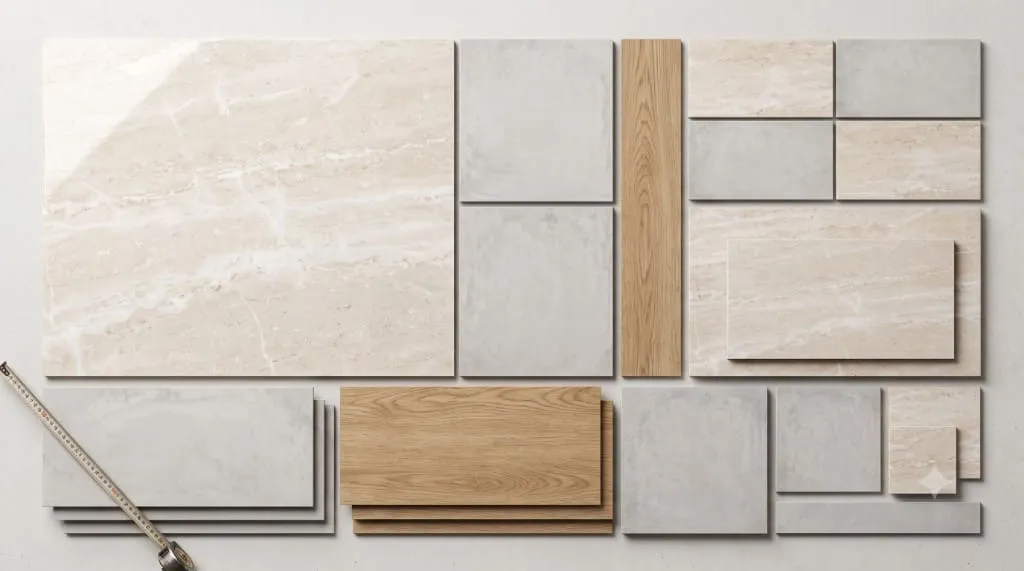
Imported porcelain is produced and labeled in centimeters, sold in the US under inch names: a 60×120 cm tile is the "24×48," a 30×60 cm the "12×24." The inch name is nominal — the metric dimension is the real one, and a 60 cm edge actually measures 23.62″, not 24″. That gap never matters until someone runs layout math in inches; then it matters on every row. Here is the full conversion chart for the formats that dominate the import trade, and the sizing logic behind them.
The master chart
All eleven formats in the GoodzHub catalog, metric first because metric is what the box says:
| Metric (actual) | Actual inches | US nominal name |
|---|---|---|
| 60×120 cm | 23.62″ × 47.24″ | 24″×48″ |
| 20×120 cm | 7.87″ × 47.24″ | 8″×48″ (plank) |
| 60×60 cm | 23.62″ × 23.62″ | 24″×24″ |
| 45×90 cm | 17.72″ × 35.43″ | 18″×36″ |
| 30×90 cm | 11.81″ × 35.43″ | 12″×36″ |
| 30×60 cm | 11.81″ × 23.62″ | 12″×24″ |
| 45×45 cm | 17.72″ × 17.72″ | 18″×18″ |
| 33×33 cm | 12.99″ × 12.99″ | 13″×13″ |
| 30×30 cm | 11.81″ × 11.81″ | 12″×12″ |
| 20×20 cm | 7.87″ × 7.87″ | 8″×8″ |
| 9×60 cm | 3.54″ × 23.62″ | 3.5″×24″ (border) |
Two working rules fall out of the chart. First, a metric tile is always slightly smaller than its inch name — about 3/8″ short per 60 cm of edge. Second, the metric system nests: 30×60 is exactly half of 60×60 is exactly half of 60×120, so mixed-format layouts from one family align on a true module. The inch names hide that logic; the centimeter labels are it.
Nominal vs. actual, and why it bites
"Nominal" sizing is not deception — it is shorthand, the same convention that makes a 2×4 stud measure 1.5″×3.5″. But tile estimating punishes anyone who forgets which number they are holding:
- Coverage math: a "24×48" figured at literal 24″×48″ is 8.00 sq ft; the real 60×120 cm tile covers 7.75 sq ft. Across a 3,000 sq ft (279 m²) order, the four-percent gap is a short pallet.
- Layout math: centering a room on nominal dimensions drifts the final cuts. Run the layout from actual size plus the real joint.
- Mixing origins: a metric 30×60 will not course cleanly with a domestic true-12×24 line. Keep an installation inside one sizing system.
The precision of the actual dimension is also why edge treatment matters: on rectified tile, that 23.62″ is held to tenths of a millimeter across the production run, which is what allows the 1/16″–1/8″ (2–3 mm) joints large formats are specified with.
Which format for which work
Formats are tools, and each has a job it was shaped for:
- 60×120 cm (24″×48″) — the current center of gravity for floors: open-plan living, lobbies, retail. Fewest joints per square foot, the most continuous read. Nearly every flagship collection — Serenity among them — anchors here.
- 20×120 cm (8″×48″) — the wood-plank module; the format of our Meşe wood-look series. Laid at a random or one-third offset, it carries timber's rhythm in porcelain.
- 60×60 cm (24″×24″) — the commercial workhorse: corridors, offices, anywhere carts and maintenance cycles rule. Also the standard body for 2 cm (3/4″) exterior pavers.
- 45×90 / 30×90 cm (18″×36″ / 12″×36″) — the bathroom-scaled large formats; 30×90 is the classic wall module, run vertical for height or horizontal for calm.
- 30×60 cm (12″×24″) — the most versatile single format in the trade: floors, walls, showers, budget-friendly, familiar to every crew.
- 45×45 / 33×33 / 30×30 cm — traditional floor squares, still the right call for compact rooms and renovation work matching existing scale.
- 20×20 cm (8″×8″) — the accent and pool-surround square.
- 9×60 cm (3.5″×24″) — border and trim work.
A useful habit when specifying: choose the largest format the space and the substrate can honestly carry, then step down one size if the room's cuts start exceeding a quarter of the field tile.
Handling notes for the big formats
Large format asks more of everything downstream of the box. Substrate flatness tightens to 1/8″ in 10 ft (3 mm in 3 m); mortar moves to a large-format (LHT) blend with back-buttering; offsets on long edges stay at one-third, not one-half, to manage the natural bow every fired slab carries; and a 60×120 piece at roughly 25 kg (55 lb) is a two-person lift with suction cups, not a one-hander off the stack. None of this is exotic — but it belongs in the bid, not discovered on site. Freight planning for the big formats — pallet weights, container loads — is covered in our container buying guide.
FAQ
- What size is 60×120 tile in inches?
- Actual size is 23.62″ × 47.24″; it is sold in the US as the nominal 24″×48″. Coverage per tile is 7.75 sq ft (0.72 m²), not 8 — use the actual figure for estimating.
- Is 24×48 tile hard to install?
- It is unforgiving rather than hard: it requires a substrate flat to 1/8″ in 10 ft, large-format mortar with back-buttering, one-third offsets, and two sets of hands per piece. Crews that meet those conditions install it routinely; crews that skip them produce lippage.
- Can I mix metric and inch-standard tiles in one layout?
- Avoid it. A metric 30×60 cm tile (11.81″×23.62″) will not course with a true 12″×24″ domestic tile — the modules drift apart with every row. Keep any single installation inside one sizing system.
Featured collections